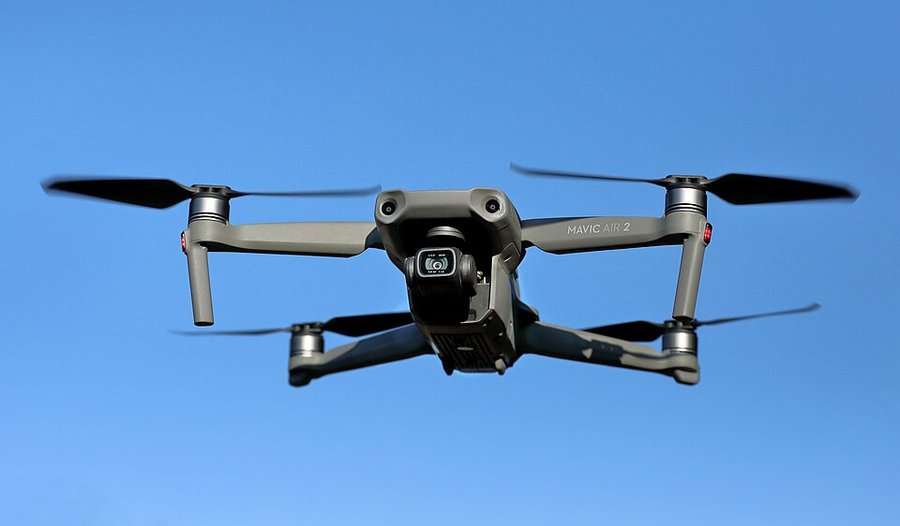
Owners take this drone into demanding places (over water, along rocky rivers, out from high viewpoints), and their accounts are divided on whether it comes back from a hard crash.
Read from 33 owner accountsUpdated October 9, 2026Thin evidence: 33 owner accounts so far, fewer than the 40 we want before we trust a pattern.Owner rating: none yetAdd yoursCompare it
What keeps coming up
Owners are divided on how well it survives crashes. On the positive side, one owner hit a large boulder, dropped onto a rocky riverbed and kept flying for many more hours on the same propellers.
Crash resilience is also where the losses come from, so owners stay divided on it. Owners describe losing a drone to water, to pilot error and to a bird of prey that knocked one out of the air into dense jungle.
The DJI Air 2 (sold by DJI as the Mavic Air 2) is a mid-size camera drone from 2020 whose arms fold for carrying. It is for hobbyists and travelers who want sharp 4K aerial video and photos without the size or price of a pro drone.
Specs
Weight
570 g
Camera
1/2-inch CMOS sensor, 12 MP and 48 MP photos
Video
4K (3840×2160) up to 60 fps
Flight time
34 minutes (no wind)
Range
10 km (FCC), 6 km (CE)
Obstacle sensing
Forward, backward and downward (vision sensors plus ToF sensor below)
Warranty
From the maker's spec page, checked October 9, 2026. A blank row means the maker does not state it.
What the specs mean
At 570 g it weighs more than 250 g, so in many countries, including the US, you have to register it before you fly. One battery gives about half an hour in the air, but in real use with wind it will be less, so plan on spare batteries. The 10 km range figure is for open areas with nothing in the way; trees and buildings cut it a lot, and US rules require you to keep the drone where you can see it anyway. It can sense obstacles in front, behind and below, but not to the sides, so be careful when flying sideways.
Newer model
DJI Air 3S replaces this one. The Air 3S has two cameras: a main camera with a much larger 1-inch sensor and a second zoom camera. It does better in low light and gives you framing choices the Air 2 doesn't have. It also senses obstacles in every direction and uses LiDAR at the front, and DJI rates it for longer flights (about 45 minutes) and much more range (about 20 km FCC). It is heavier (about 724 g) and costs more.
Compare the Air 2 with…
Pick up to three. You get a page with just those,
side by side, on the subjects owners raised.
The accounts here are about flying in places that test the aircraft: over water, low along rivers in ActiveTrack, and from a sightseeing tower abroad. A veteran flier who has flown since the early days says GPS drones like this last far longer than the early models did, and that his first dunking came after years of flying.
Living with it means accepting some risk. One owner who flew into an obstacle in ActiveTrack could not work out why it happened. Another, after losing theirs to a mistake, went back to a smaller DJI Neo to rebuild confidence before moving up again. The veteran's approach is to treat a crash as part of the hobby and carry on.
Reliability & repairs
When it survives an impact, it can survive a hard one. One owner kept flying normally after a collision with a boulder and a fall onto rocks. The failures owners describe are total losses rather than gradual wear: a landing in water, a bird attack and a pilot error. Owners respond by shrugging it off and flying again, or by stepping down to a smaller drone for a while.
The long-term record here is thin. Only a handful of owners raised a recurring theme, and every one of those accounts is about crashes, with nothing on batteries, the gimbal, the camera or everyday wear. Several of the comments are about the Air 2S or the Mavic Air 2 rather than this exact model, so treat this as a narrow, partial picture.
Lifespan
When it breaksNo account here describes a failure yet.
Still going1 say theirs still works; none has had it a year yet.
More detail What owners praise, where they are split, and the
follow-up timeline
What owners praise
Nothing with a clear majority yet. Owners who raised these subjects were split, or too few to judge.
Nothing has a clear majority against it yet. Counted from the owners who raised each subject, not from everyone. A subject is judged once at least 4 owners raise it.
13 more subjects came up from fewer than 4 owners each, which is not enough for a fair reading. To see how it stacks up, compare it with another machine.
Does it still kick?
The same owner, asked again at each point. Fills in as owners answer.
Own this one?
Two questions: how long you have had it, and anything you would
like to say about it. Then we ask again as it ages. This helps our
mission.
Still good used? What a used buyer should know, from owners a year or more in
Among the 2 owner accounts here that gave a duration, 0 described a failure.
Before you buy one used, ask the seller: how old it is, whether it was ever repaired and by whom, and whether any of the parts above have been replaced. Ask to see it run. A receipt tells you the warranty start date; most makers honour the term only for the first owner.
Where this came from
Where this came from
Public discussions we read and summarised in our own
words. Nothing here was submitted to Still Kicks.
Counted from public accounts by people who said they own it, and summarised by Still Kicks in its own words. Not a manufacturer claim, a lab test or an estimate.
No account needed to look. Sign in with Google only if you want to track something you own.